
Convergence only proves numerical stability, not physical correctness.
My framework for your biggest ROI from simulations.

Let’s get real…
Why bother setting up a virtual / digital simulation in the first place?
Why spend so much time and struggle on generating a mesh?
Why wait for days on end for results that may only be an approximation at best?
I got started in the industry back in 2008 and I was always wondering why someone would pay me to think up design solutions (the term “knowledge” worker wasn’t really a thing then, or at least I never heard it said in industry).
The engineering design and simulation landscape was also a little different…
Large assembly models crashed everything (including the project!)
Forced to run steady-state physics simulations due to hardware limitations
A clean 500k cell mesh was a real achievement!
Simulation was still viewed as a “nice-to-have” rather than a necessity
Cloud tools / scale was non-existent
Well, it’s 2026 and the tools have come a long, long way, mostly due to the compounding hardware developments.
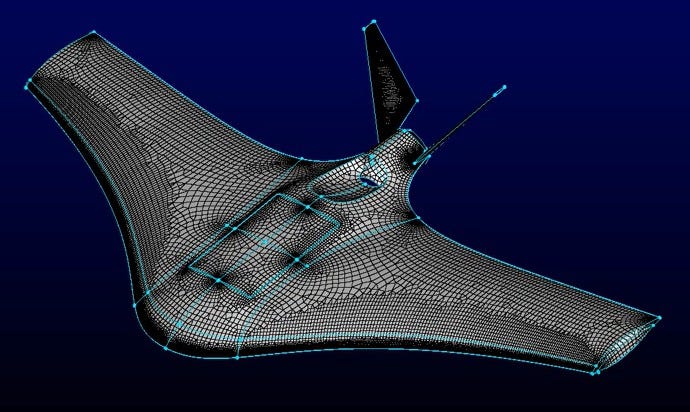
Computational simulations provide the huge benefit of a virtual environment, without the absolute need for physical construction and testing (although, as you’ll see later I always recommend it).
Once you have a trustworthy simulation result as an Engineer, you can answer some questions about your design and in turn support the business in a real, meaningful way, impacting the bottom line.
This is where the true value of simulation lies.
Now we know the “why”, let me explain the how.
You need a process that is inherently diligent and progressive.
Honestly, if I’ve learnt anything around the real, messy engineering reality of designing physical products, it’s this.
It keeps you methodical, sane and tends to result in the best ROI for the business itself, in more than one way.
Here’s my 4-step framework I’ve used in client simulation work:
Develop a simple (first) model
Test your assumptions, specific setup and solver choices.
This is your physics validation step.Setup the more complex model
Test your mesh refinement, time step, residual behaviour.
This is your numerical validation step.Plan a production-grade model
Check for expected physics, flow, forces.
This is your engineering validation step.Compare your results
Check the results against previous prototypes, data, measurements.
This is your strongest validation.
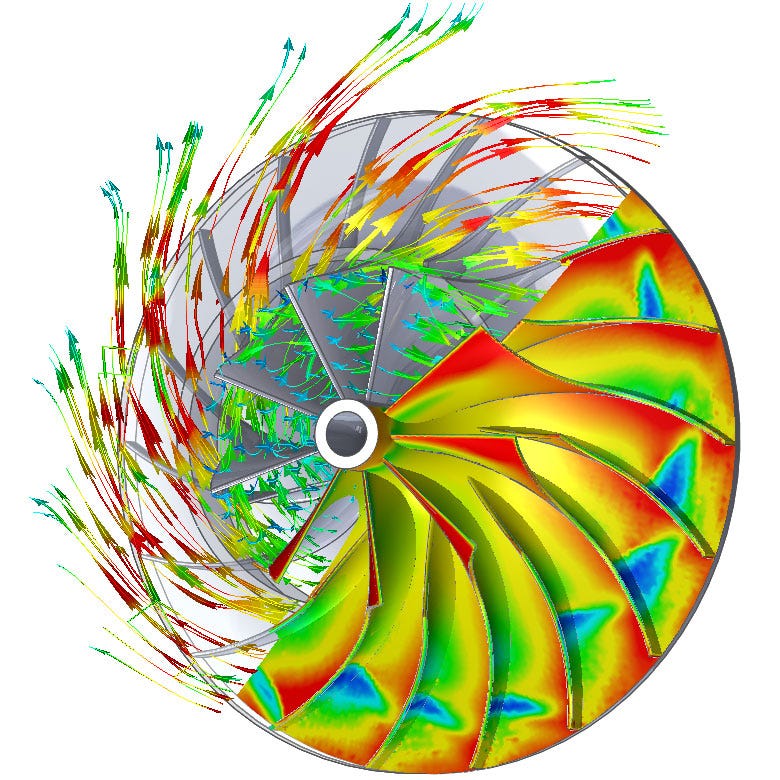
The bottom line (pun intended!)
The process is about building confidence in the results - to a point where you can trust where they came from, how you got them and consequently make supportive design and business decisions.
See you soon. 👋
Nasser