
My "Minimum Viable Simulation" method
CFD case setup keeping the solver in mind...

Professional Engineers use simulation tools differently.
They’ve been in the trenches.
They’re up against the deadlines.
They’ve developed workflows to mitigate the risks.
I’ve noticed, even in my own Engineering journey, that I was forced to develop a better way of doing things if I was ever to “graduate” beyond the junior role.
If my work was ever to be taken seriously by others.
Previously, I’ve written on developing a simulation strategy, which this post is related to. If you missed it, take a look here:

Whenever you start a new simulation project for a new product or design, start with the right questions…
Here’s a list I put together for you:
1. Ask the engineering question, delay the physics
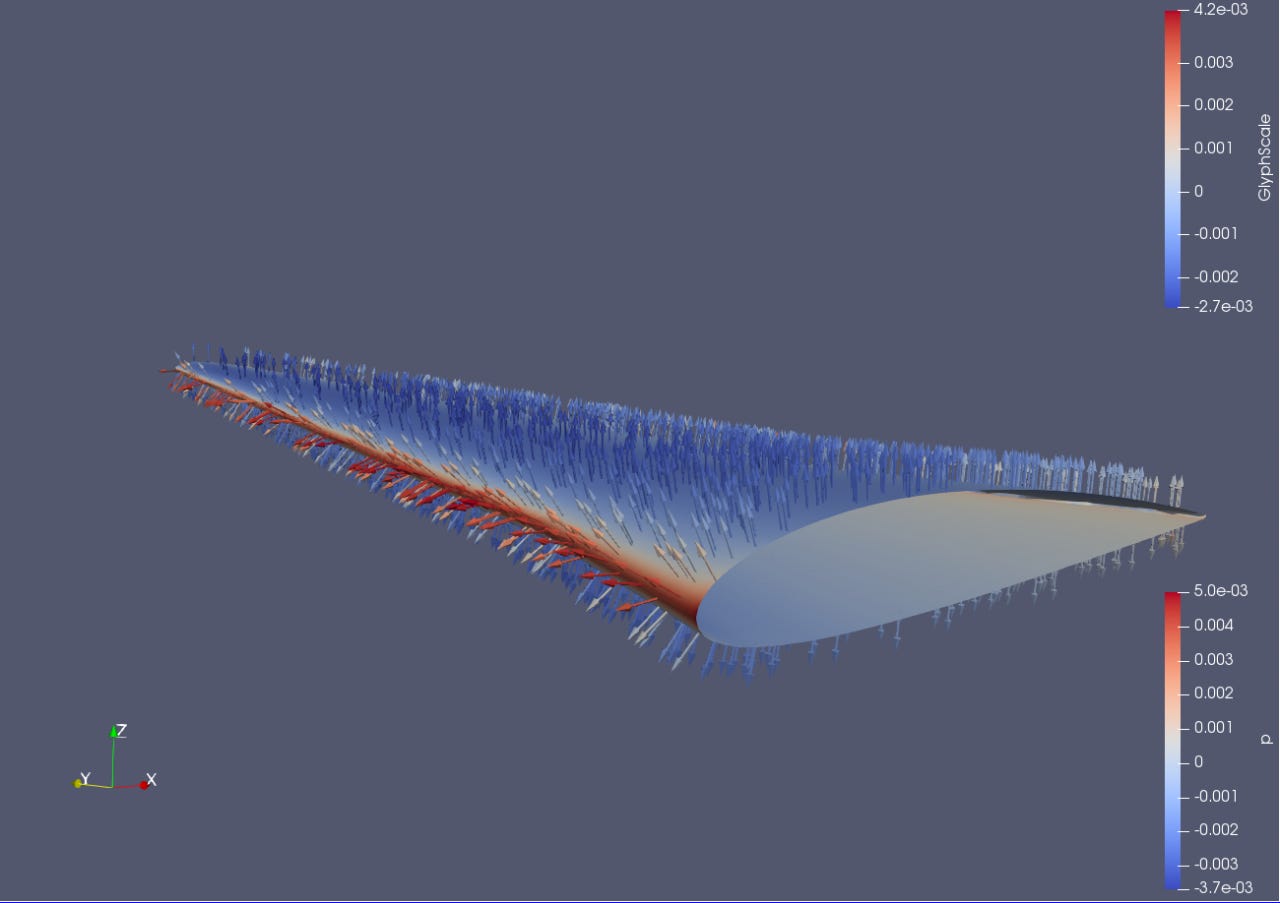
Ask: What do I actually need at the end?
Lift?
Pressure drop?
Temperature distribution?
Flow rate?
Noise?
Whatever that one thing is becomes your compass.
RESULT: Anything not needed to get that number is not part of version 1.
2. Classify the physics early using the simplest bins
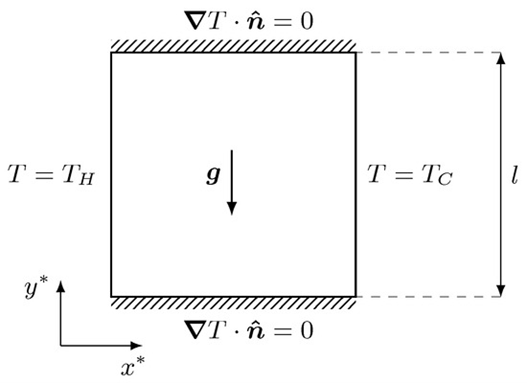
These choices lock others into place.
Choose between:
Flow type (Internal vs external)
Mach regime (Incompressible vs compressible)
Time nature (Steady vs transient)
Turbulence (RANS first unless you truly need LES/DES)
Phases (Single-phase unless the phenomenon demands more)
RESULT: This narrows the OpenFOAM solver list from ~50 to like 1–3 candidates.
3. Prioritise: what really changes the answer?
A simple rule of thumb:
Mesh quality > Turbulence model > Numerical schemes > Geometry details
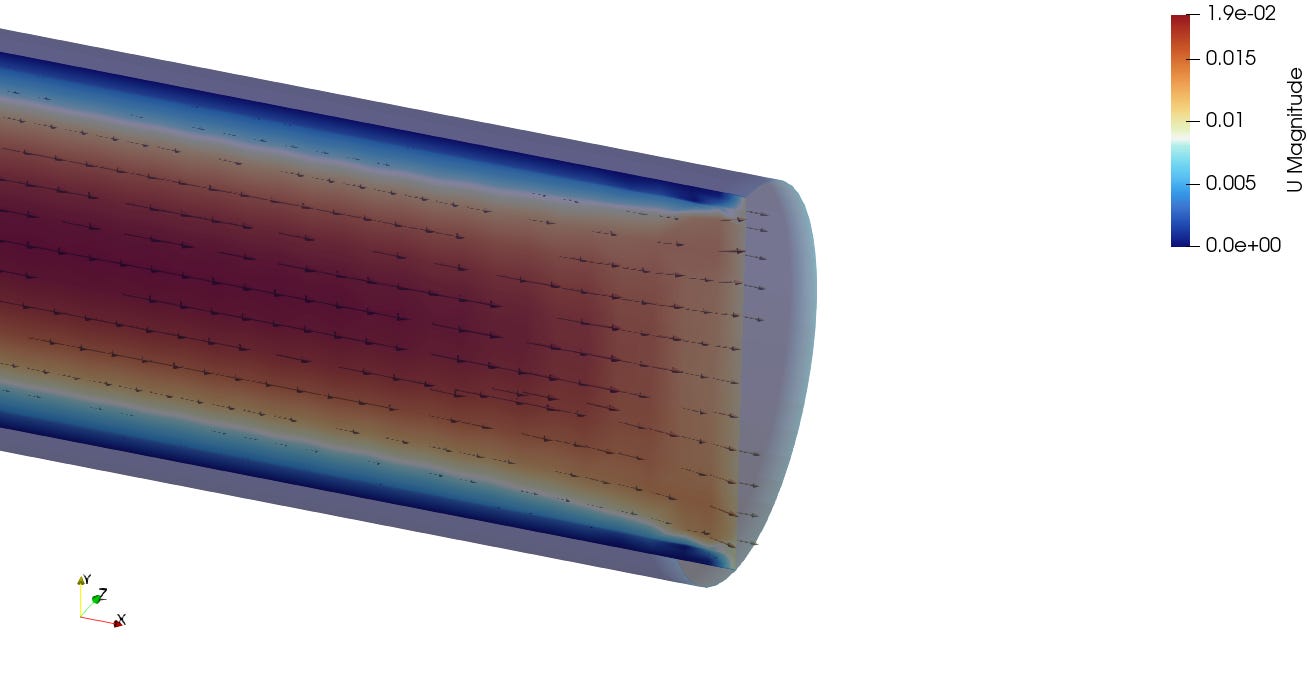
Fancy chemical reactions mean nothing if your mesh looks like a crushed soda can.
RESULT: Start with clean geometry and low complexity. Add details only when the coarse model fails.
4. Develop your “Minimum Viable Simulation”
Like drawing a sketch before a masterpiece, develop:
A coarse mesh to act as a base line
Get it working with a steady RANS turbulence model
Stick with default numerical solver settings
Constrain to one operating condition
RESULT: Get your first / draft answer in hours, not weeks. Then test sensitivity.
5. Document assumptions like a detective
Write no more than one page:
What physics are included?
What physics are excluded?
Why is this acceptable theoretically?
When does the answer become invalid?
RESULT: If the assumptions don’t hold, the model doesn’t hold.
6. Apply progressive refinement to the case
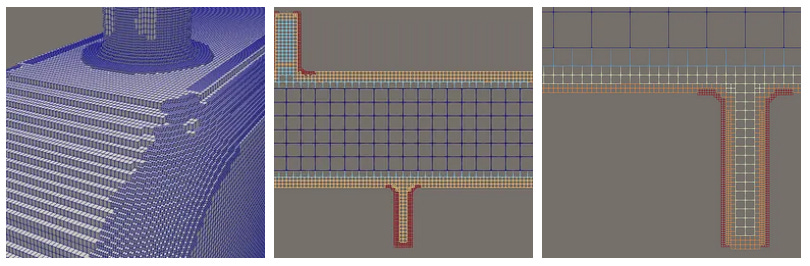
You only add when you can justify:
• More mesh near walls
• A better turbulence model
• Conjugate heat transfer
• Transient flow behaviour
• Multi-phase or reacting flow problems
RESULT: Small steps and a single purpose for each upgrade.
This is what building a “minimum viable simulation” model looks like in practice.
I hope it helps you plan and develop your OpenFOAM simulations with clarity and intent.
See you next week 👋